



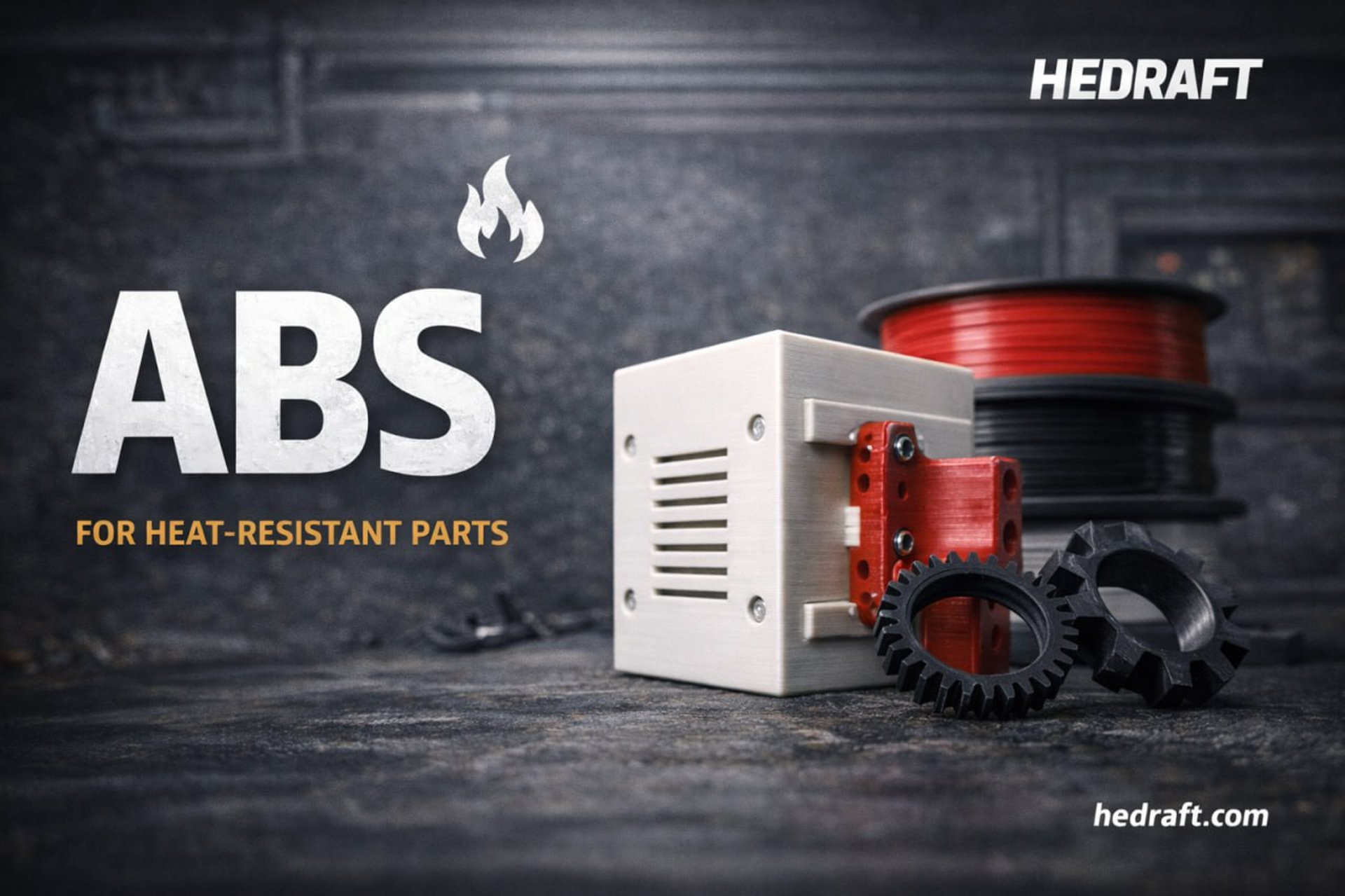
ABS
ABS is an engineering plastic used in 3D printing where heat resistance and durability are essential. At HEDRAFT, we use ABS to print electronic parts, housings, mounts, and repair components that operate at elevated temperatures.
ABS - for heat-resistant parts and housings
ABS is chosen when PETG has already reached its temperature limit but reliability is required. This material is used for housings, covers, mounts, and technical parts that operate near heat or in warm conditions.
Where ABS is suitable:
Appliance and electronics housings and casings (where heat is present)
Parts near heat sources: air ducts, casings, protective elements
Fasteners and brackets for equipment in warm conditions
Home appliances and appliance repair parts (in-house)
Functional prototypes before production begins
Parts that require post-processing (sanding, gluing, painting – as needed)
When ABS is not the best choice
Constant outdoor/UV/moisture exposure – ASA is a better choice
Maximum rigidity and wear resistance required – PA/PAHT-CF is a better choice
Flexibility is required – TPU is a better choice
Need to get a perfect "show" look without post-processing - PLA is sometimes easier (if there is no heat)
Why choose ABS?
Higher heat resistance than PLA and often higher than PETG.
Good mechanical properties for technical parts.
Post-processing is possible (assembly, grinding, fitting).
A good solution for repairing parts in warm operating areas.
What we check before printing ABS
Operating temperature: what temperature and where exactly?
Will it be exposed to moisture/outdoors/UV (if yes → ASA)
Load type: static/shock/vibration
Is an exact fit/tolerance required?
Is post-processing required (appearance, assembly, painting)?
Examples of ABS products
Instrument cases and covers
Housings, air ducts, protective elements
Equipment mounts
Equipment repair parts (for premises)
Frequently asked questions:
Is ABS suitable for parts near heat?
Yes. ABS is used to produce heat-resistant housings and technical parts. If the temperature is high or the conditions are harsh, we will choose a more precise material (ABS/ASA/PA).
Is ABS suitable for street driving?
Is ABS suitable for electronics housings?
Can ABS be painted and processed?
Is ABS stronger than PETG?
Yes, ABS is often used for housings, casings, and technical boxes, especially where there is heat inside.
It depends on the application. PETG is more flexible and often has better impact resistance, while ABS is usually chosen for its temperature and engineering applications.
For continuous outdoor use and exposure to UV radiation, ASA is better. For indoor and warmer areas, ABS is more often chosen.
Yes, ABS is well suited for post-processing (assembly, grinding, assembly). We choose the processing method depending on the product.
If you need street and temperature, what to choose?
Typically we look at ASA (outdoor/UV) or PA/PAHT-CF (load/temperature) materials. We will choose the material based on the conditions.