



PLA
HEDRAFT prints non-standard parts, prototypes and decorative items in Riga and throughout Latvia. We select the most suitable plastic for the job: appearance, load, temperature and operating conditions. Below are the materials we work with on a daily basis.
PLA - 3D printing of prototypes, models and decors
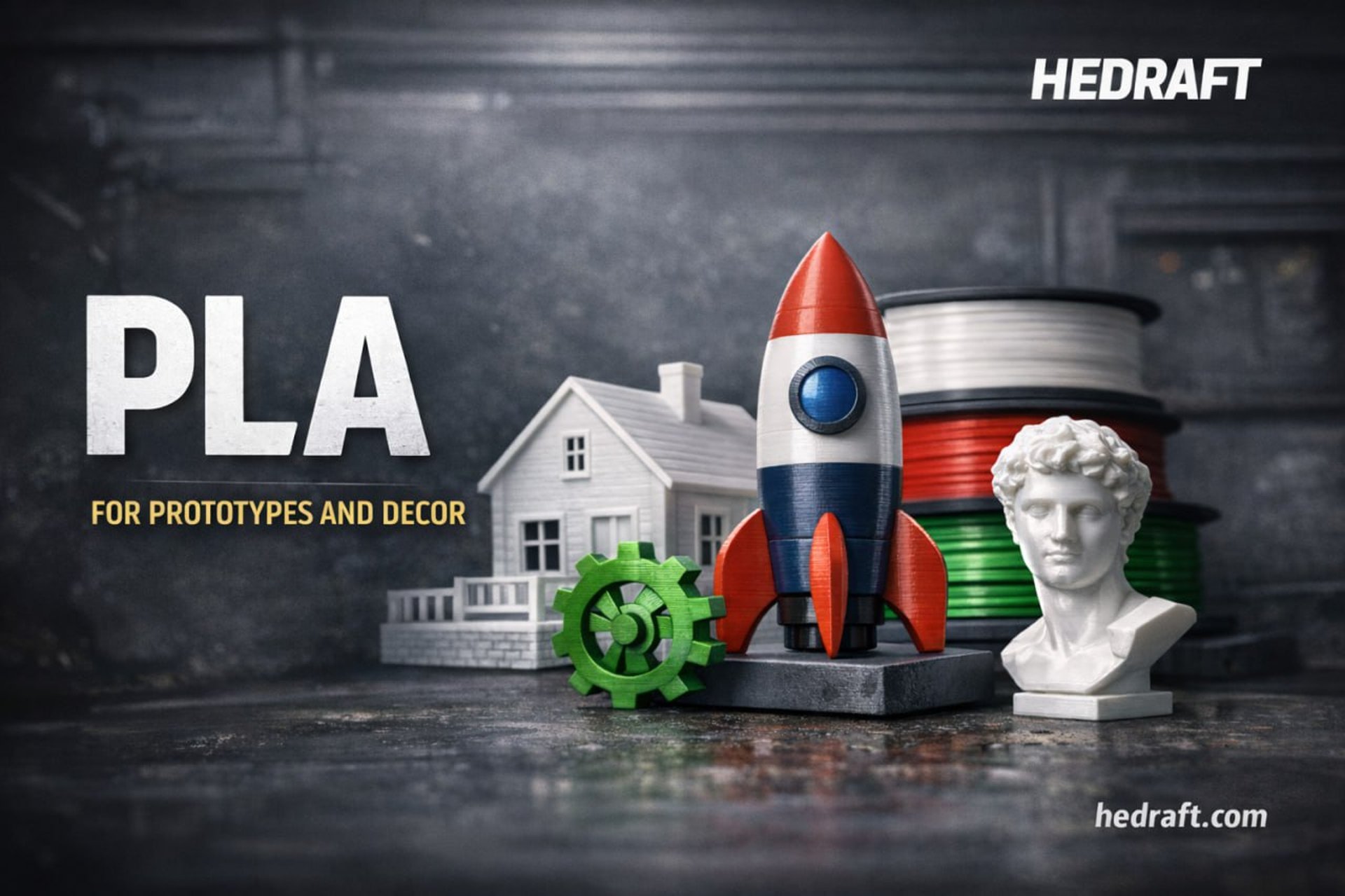
PLA is a 3D printing material for applications that require a clean look, high part quality, and fast turnaround. We use PLA for prototypes, mockups, decorative elements, and items intended for indoor use without heat or high impact loads.
Where PLA is suitable
Prototypes: checking shape, size, fit and ergonomics
Models and architectural models: buildings, interior elements, display stands
Decor and souvenirs: figurines, panels, plaques, decorative elements
Cool cases: covers, panels, decorative covers
Presentation and sales parts: product samples, mockups
Rapid tests: when you need to quickly demonstrate results to the client
When PLA is not the best choice
For outdoor use (sun/UV/weather) - ASA is a better solution
High temperatures (near a heat source, in a car in the sun) - ABS/ASA/PA is a better solution
Impact and bending - PETG or PA is a better option
Parts that need to "spring" — TPU is a better solution
Why choose PLA
Clean surface and appearance (minimum "technical" appearance)
High details for small parts
Rapid prototyping and mock-ups
Great opportunity "before implementation in engineering plastics production" - first PLA, then PETG/ASA
What we need to know before printing PLA
Where will the product be used: indoors/outdoors?
Will it be heated (operating temperature)?
Is there a load (static/impact)?
Surface type requirements: "showcase" or "technical"?
Is any further processing (sanding/painting/gluing) required?
Examples of PLA products
Architectural models and interior elements
Product and case demonstration prototypes
Decorative details and souvenirs
Signs, forms and templates for "trying out"
Frequently asked questions:
Is PLA suitable for outdoor use?
PLA is best used indoors. Outdoors and in direct sunlight, the material deteriorates faster. For outdoor use, we recommend ASA.
Can PLA withstand high temperatures?
Is it possible to first make a prototype from PLA and then from the "working" plastic?
Is PLA durable?
For prototypes and parts that are not subject to significant loads, yes. For impact loads, bending, and work fixtures, we often choose PETG or PA.
PLA is not suitable for parts near heat sources or in hot environments. If heat resistance is required, choose ABS/ASA or PA/PAHT-CF.
Yes, this is the usual approach: first PLA to check the shape and fit, then print the final version in PETG/ASA/PA.